Palletised freight is any shipment stacked, wrapped, and secured on a pallet so it moves as one unit. That’s the short answer. What matters more is how your goods sit on that pallet, because it decides how they’re handled, priced, and delivered.
Key points
- Palletised freight turns many cartons into one unit that a forklift or pallet jack can move.
- One unit means fewer touchpoints, faster loading, and far less chance of cartons going missing.
- Pallets are usually charged on actual or cubic weight, whichever is higher, so a well-built pallet saves money.
- A pallet that’s unstable or overhanging can be refused at pickup, so the build matters as much as the booking.
What is palletised freight?
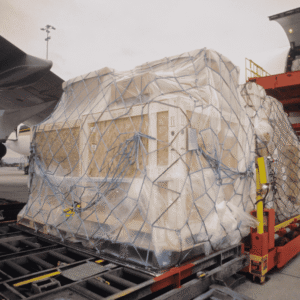
Palletised freight is goods stacked on a flat timber or plastic base, then stretch-wrapped and often strapped so the whole load travels as one consignment. Instead of twenty cartons loaded by hand, a forklift lifts one stable unit.
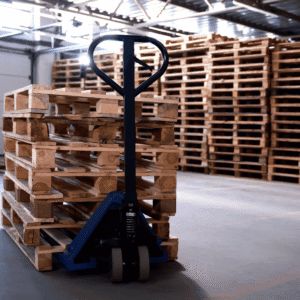
In Australia, most freight moves on the 1165mm by 1165mm standard plain pallet. Its square footprint was designed around local rail containers, truck decks and warehouse racking, which is why it’s the default for most pallet transport between states.
How is palletised freight different from loose freight?
Loose freight is cartons loaded and unloaded one at a time. The difference shows up at every stage.
Palletised freight
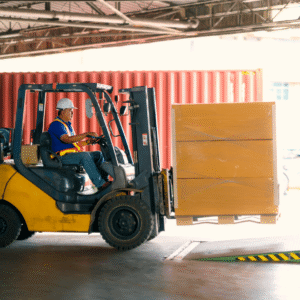
- ✓ Lifted by forklift or tailgate in one movement at pickup, depot and delivery
- ✓ Cartons stay together, so nothing gets left behind at a transfer point
- ✓ Quick to check on arrival: one pallet, one line on the paperwork
- ✓ Wrapping holds the load firm, so less shifting on the road
Loose freight
- ✗ Every carton handled by hand, often several times
- ✗ Easier for single cartons to be crushed, separated, or misrouted
- ✗ Slower to load, unload and count
- ✓ Still sensible for one or two light boxes
A useful test: if you’d need a trolley to move the cartons, they probably belong on a pallet.

What kinds of goods suit palletised freight?
Anything boxed, bagged or packaged in consistent shapes palletises well. We move palletised freight every week for retail, FMCG and food, manufacturing, wholesale, e-commerce, machinery and engineering businesses. Typical loads include:
- Store replenishment and stock for distribution centres
- Packaged food and grocery lines
- Manufactured parts, components and spares
- Bulk e-commerce stock moving between warehouses
Goods too wide, long or heavy for a standard pallet, such as large machinery or project cargo, are a job for over-dimensional transport, which we also arrange.
What makes a good pallet build?
Most freight problems start here, and small changes pay off.
Heavy at the bottom, square to the edges
Put the heaviest cartons on the base layer and build up in straight columns or an interlocking brick pattern. Keep everything inside the pallet’s edges. Overhang adds to the cubic size you’re charged for, catches on other freight, and is one of the most common reasons a pallet gets refused at pickup.
Wrap it like it’s going to be bumped
It will be. Wrap firmly from the base of the pallet up, so the load is locked to the timber rather than just wrapped to itself. Add strapping or corner boards for heavy or tall loads.
Keep the height sensible
A tall, light pallet can cost more than a short, heavy one, because freight is charged on actual weight or cubic weight, whichever is higher. Building wider and lower often brings the price down.
How does palletised freight move across Australia?
After pickup, your pallet goes to a local depot, joins a linehaul run (the long-distance leg by road or rail) to the destination city, then heads out for final delivery. Smaller consignments share truck space with other freight, while larger volumes can fill a whole truck.
When you book, flag whether the delivery site has a forklift or dock, and whether the receiver needs goods at a set time. Both shape which service suits, and time-slot deliveries help where the window is tight.
What should you check before sending a pallet?
- ✓ The pallet itself is sound, with no broken boards
- ✓ You’ve measured the full stacked height
- ✓ You know the gross weight, including the pallet
- ✓ Sender and receiver details are clearly labelled
How AS Freight handles palletised freight
Pallets are at the core of our business. We’ve built our service around moving palletised goods between states, working with trusted carriers to reach major cities, regional centres and rural areas.
Every client gets a dedicated account manager who knows your freight, plus access to our online portal for booking and tracking. If something about your pallet isn’t quite right, we’ll tell you before pickup rather than after a refusal.
From a single pallet to a full truckload, our palletised freight service is tailored to your goods, route and timeframe.
Frequently asked questions
1. Is palletised freight cheaper than sending loose cartons?
Often, yes, once you’re sending more than a few cartons to one place, as pallets cut handling time and damage risk. Price still depends on size, weight, distance, and service.
2. Can I send just one pallet?
Yes. There’s no minimum, and sharing truck space with other freight keeps a single pallet cost-efficient.
3. What’s the difference between LTL and FTL for pallets?
LTL (Less Than Truck Load) means your pallets share a truck with other freight. FTL (Full Truck Load) means the truck carries only your goods. LTL suits smaller shipments, while FTL makes sense for high volumes.
4. Why would a carrier refuse my pallet?
The usual reasons are overhang, loose or damaged wrapping, a broken pallet, or a load that leans. Building square, wrapping firmly, and checking the pallet before pickup avoids most refusals.
5. What do I need to book palletised freight with AS Freight?
Send us the pickup and delivery locations, number of pallets, dimensions, and weight. Add any timing or site access details, and we’ll come back with the right service and a tailored quote.