


Get Your Free Custom Freight Quote Today
Share your requirements with us, and our experts will assess your shipping needs to deliver a cost-effective solution
"*" indicates required fields
AS Freight provides interstate freight transport for businesses moving goods between Australian states. Rather than operating a single fixed fleet, we work across a network of local, regional and national carriers, which means each consignment is matched to an operator that already runs your lane – instead of being forced onto whatever service happens to be available.
That matters most on the routes the big national carriers treat as marginal: regional Victoria, northern NSW, central Queensland and the long west-coast runs. Those are the lanes where a mismatched carrier turns a two-day delivery into a week.
Palletised and cartonised general freight, part loads and full truckloads, oversized and over-dimensional items, machinery and equipment, packaged food and FMCG, retail and e-commerce stock, construction materials, and freight requiring tailgate or two-person delivery. If you are moving pallets specifically, our interstate pallet transport service covers single-pallet through to multi-pallet consignments.
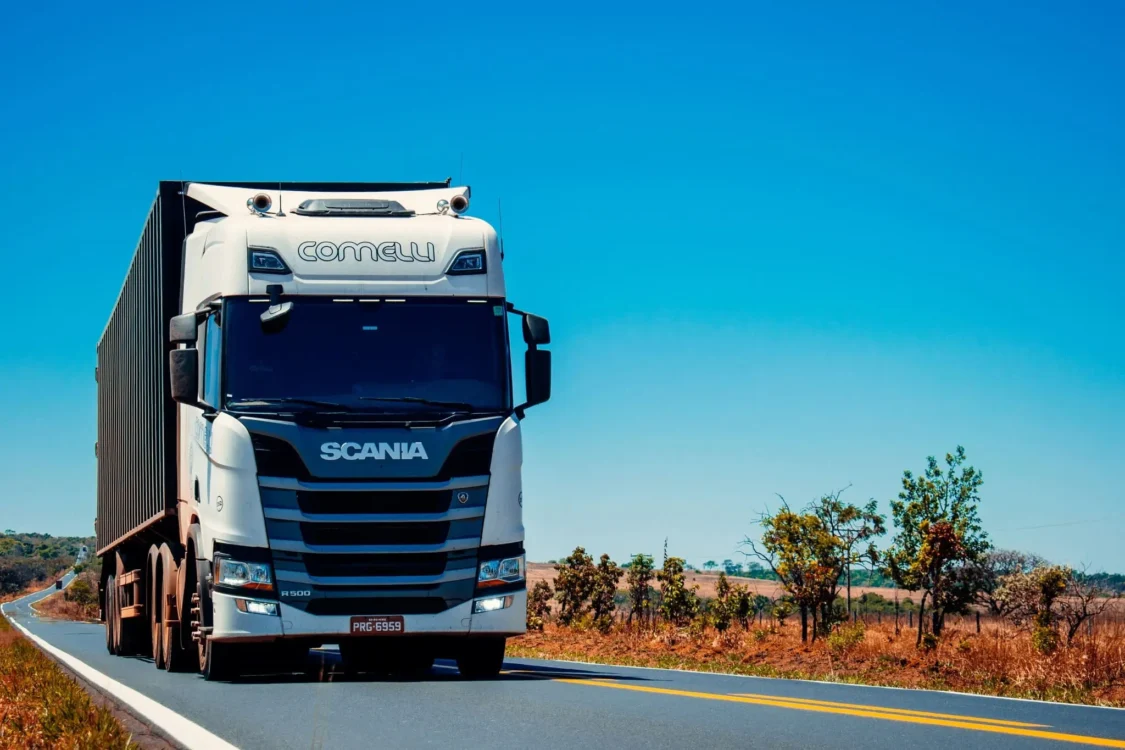

We utilise advanced route optimisation to determine the most efficient paths for our semi-trailer and full-load transport services. Our strategies minimise transit times and reduce freight costs, ensuring timely delivery across state lines. Whether it be via a point-to-point direct route or utilising our national resources that allow us to cross-dock freight for safer, more efficient and cost-effective solutions. We are capable of meeting any requirements.

We offer a full range of full semi-trailer or full truck transport services, so you don’t have to use different transport companies for different needs.
Whether you need a full truckload (FTL), less-than-truckload (LTL), or specialised freight transport, we offer flexible options to suit your needs. Our extensive network of carriers ensures that we can securely store your commercial goods and meet your requirements efficiently.

Stay informed with our real-time tracking system, which provides visibility into your shipments’ locations and status.
From pallets and skids to full loads, to small cartons and over-dimensional freight, we can take care of all your interstate logistical needs. We ensure you receive timely updates and alerts, so you always know when to expect your goods.

Our experienced team is committed to providing exceptional customer service. With a dedicated account manager assigned to your business, you’ll receive personalised attention and proactive communication throughout the transport process.

We understand that every business is unique. Our team works closely with you to develop customised transport solutions that fit your specific operational needs, ensuring seamless integration with your supply chain.
Though we don’t offer a specific express delivery service, all our road freight and freight transport solutions are optimised to reach their destination as quickly as possible. Our experienced team can coordinate point-to-point deliveries where freight is only handled at the collection and delivery locations, along with overnight express options if required.
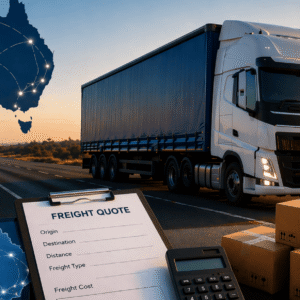
Freight costs depend on the volume, weight, and distance of your shipment. Pricing may vary based on your freight profile, but we’re committed to offering a competitive price without compromising on safe road freight transport and reliability. Contact our team today to learn more or request a tailored quote.
With our diverse fleet, we can accommodate all your delivery needs. Whether you’re moving lightweight road freight, small parcels, heavy pallets, construction materials, or commercial goods, our experienced team ensures everything is delivered safely and on time across Australia.
Not at all. Our interstate freight transport solutions are tailored to suit your needs – no matter how big or small. From small parcels to full pallets, you’re in the right hands with AS Freight, delivering safely and reliably through our road freight network across the country.
The time it takes to deliver your interstate road freight depends on the distance and the type of service required. At AS Freight, we optimise every route to ensure timely deliveries, keeping you informed with real-time updates from our experienced team.
We provide interstate road freight transport services across Australia, covering all capital cities, major metro areas, and regional centres. Whether you’re transporting pallets between Melbourne, Sydney, Perth, Adelaide, Brisbane, or Canberra – or delivering to smaller rural towns – our nationwide network ensures dependable freight transport wherever your business operates.
Yes. Our road freight network extends beyond capital cities to include metro and regional communities right across the country. We’re committed to connecting every corner of Australia with reliable interstate freight and pallet delivery, ensuring consistent service from coast to coast.
Absolutely. AS Freight manages road freight deliveries between Australia’s capital cities and rural destinations, offering the same reliable service across every route. Whether it’s a shipment from a metro hub or a remote regional site, we provide safe transport and efficient logistics solutions to keep your goods moving nationwide.
Melbourne to Sydney, Melbourne to Adelaide and Sydney to Brisbane are typically overnight to two business days for general palletised freight. Melbourne to Brisbane runs two to three days, Adelaide to Perth three to four, and the longer west-coast lanes such as Sydney or Brisbane to Perth five to eight business days. Regional and rural destinations add transit time. We confirm exact timings for your lane when we quote.
We quote every mainland lane. Our highest-volume corridors are Melbourne to Sydney, Melbourne to Brisbane, Melbourne to Adelaide, Melbourne to Perth, and Sydney to Brisbane, where we hold the most carrier capacity. We also handle regional origin and destination pairs that larger national carriers service infrequently.
There is no minimum. We move single pallets, part loads and full truckloads. Single-pallet consignments travel on consolidated linehaul, which keeps the rate competitive without giving up transit time. For pallet-specific requirements see our interstate pallet transport service.
Send us the pickup and delivery postcodes, the number and dimensions of your pallets or items, total weight, and when it needs to move. That is enough to price most lanes same day. Anything unusual – oversized items, timeslotted deliveries, tailgate requirements – just flag it and we will factor it in rather than surprising you later.
Pickup and delivery suburbs, freight type, pallet or item count, dimensions of each packed pallet, weight, and any site access notes such as forklift availability or tailgate requirements. With those we can usually quote transit time and price the same day.
Yes, often as much as weight does. Deck space is what you are paying for, so height, overhang past the pallet base and whether the freight is stackable all change how the load is planned and priced. Always give the full outside measurement of the packed pallet, not just the pallet footprint.
Whenever there is no forklift, no loading dock, or no safe way to unload from a standard truck at either end. Tailgate is the single most commonly omitted detail in quote requests and it changes the vehicle required, so flagging it upfront avoids the quote changing after you book.

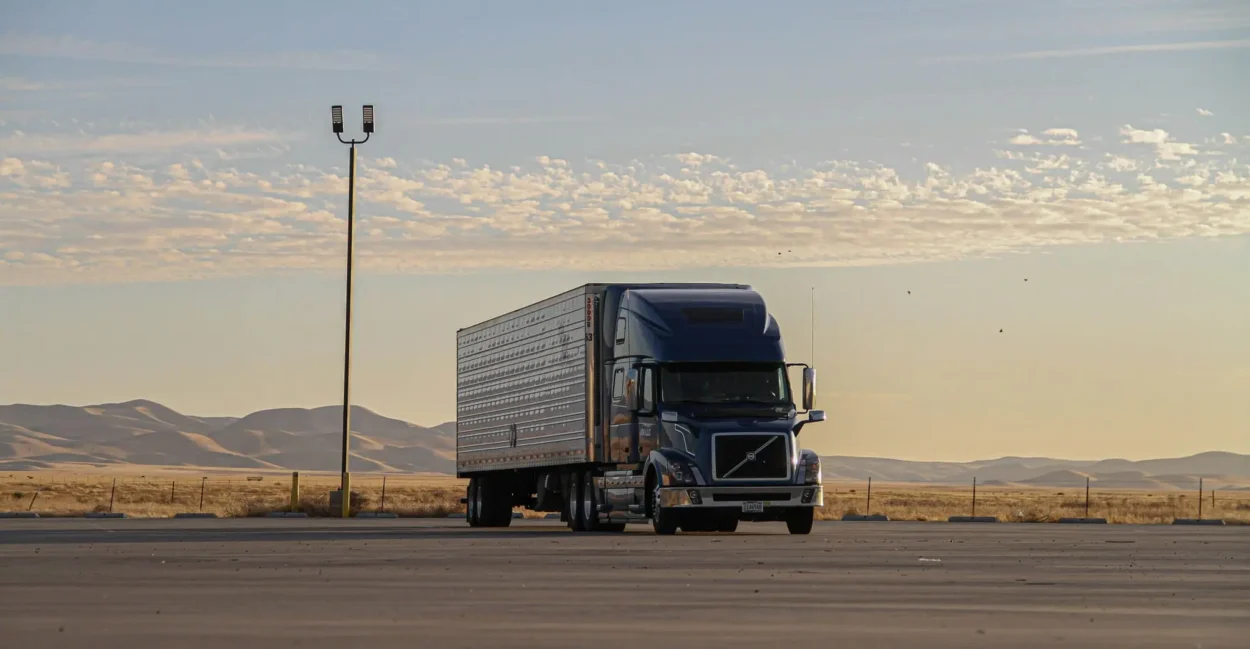
Our interstate transport services connect businesses across every mainland capital, along with metropolitan, regional and selected rural destinations. Because we draw on local, regional and national carriers rather than one fixed network, we can service locations that receive infrequent deliveries from the major national operators.
Typical industry transit times for general palletised road freight, depot to depot, in business days. These are indicative guides only, not guaranteed delivery times – actual transit depends on the carrier, pickup cut-off, freight profile and destination. Regional and rural destinations add transit time. We confirm the transit time for your specific lane when we quote.
| Lane | Indicative transit |
|---|---|
| Melbourne – Sydney | 1 business day |
| Melbourne – Adelaide | 1 business day |
| Melbourne – Canberra | 1–2 business days |
| Melbourne – Brisbane | 2–3 business days |
| Sydney – Brisbane | 1–2 business days |
| Sydney – Adelaide | 2 business days |
| Adelaide – Perth | 3–4 business days |
| Melbourne – Perth | 4–6 business days |
| Sydney – Perth | 5–7 business days |
| Brisbane – Perth | 6–8 business days |
| Melbourne – Darwin | 5–7 business days |
| Melbourne – Hobart | 3–5 business days |
Most quote revisions come from details left out of the original request – pallet height, true pallet count, site access and tailgate requirements are the four that change a price most often. Send these and we can usually come back with transit time and price the same day.
Freight details
Site details
Booking details
A quick note on why dimensions matter as much as weight: a light pallet that is tall, non-stackable or overhanging takes more deck space than a heavier standard pallet, and deck space is what you are actually paying for. A pallet quoted at 1.2m that turns up at 1.8m and cannot be stacked changes the vehicle it needs to go on.
AS Freight makes interstate freight transport straightforward by coordinating the carriers, routes and delivery requirements involved in moving goods between states.
From individual pallets and smaller consignments to semi-trailers and full truckloads, our team can arrange a transport service suited to your freight volume, route and timeframe.
The corridors we move the most freight on:
Not on the list? We quote every mainland lane, including regional origin and destination pairs. Tell us where it needs to go and we will confirm transit and price.
A S Freight & Logistics Pty Ltd · ABN 63 675 486 254 · Victoria, Australia

Contact
Take the next step in optimising your distribution and supply chain needs. We would love to understand your objectives and challenges, then review your existing solution to identify where we could add value in the future…
Share your requirements with us, and our experts will assess your shipping needs to deliver a cost-effective solution
"*" indicates required fields